

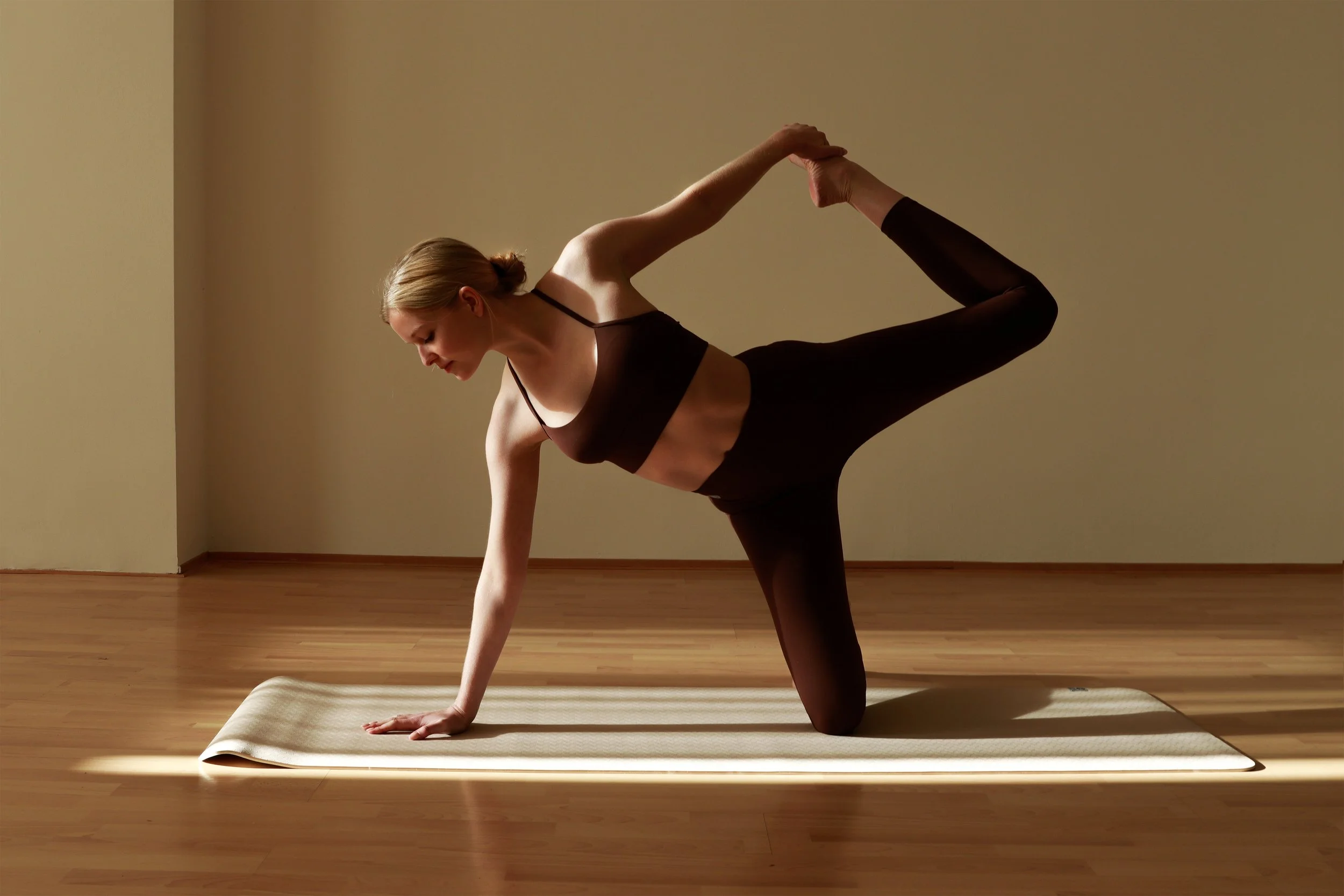
Get the most out of your Pilates practice.
A guide with extra context and inspiration to support you as you explore the exercises. Take what resonates, and create personalised routines that truly serve you.
introduction
6 core principles
the breath
the pelvis & the spine
how to use Your Pilates Deck
optimise your practise
disclaimers
INDEX
Pilates isn’t just a workout;
it’s a lifelong journey to overall health.
introduction
Pilates, originally developed by Joseph H. Pilates in the early 1900s, is a system of exercises designed to strengthen, stretch, and rebalance the body. Built on the principle of treating the body as an integrated whole, it aims to improve alignment, restore balance, and build functional strength.
First known as Contrology, Joseph Pilates viewed his method as a way of living — a lifelong path to overall health rather than just an exercise routine.
Over time, Pilates has evolved, incorporating new perspectives and movement approaches, yet its foundation remains unchanged. With Your Pilates Deck, we aim to honour that philosophy: mindful movement that supports both body and mind.
the 6 core principles of Pilates
Every Pilates practice — classical or more contemporary — is built on six core principles. Joseph Pilates didn’t name them explicitly; they are drawn from his writing, teaching, and the way he approached movement. It is these principles that transform a workout into the mind-body practice that Pilates is.
It is not the perfect integration of these concepts one should strive for, but the lifelong journey of learning and progression.
Keep these principles in mind during your practice. Let them be your guide, both in movement and awareness. And experience the potential when you really connect your mind with your body.
Centering
Your center — often called your “powerhouse”, and commonly referred to as your “core” — includes the muscles between your lower ribs and your hips: the abdominals, back muscles, pelvic floor, and glutes. A supported center forms the foundation for every movement. Begin each exercise from this place of stability, allowing energy and control to flow through the rest of your body.
Concentration
Focused attention is essential in Pilates. The effectiveness of the method comes from intentional movement and proper form, not from rushing or increasing repetitions. Take your time to concentrate on what you feel in your body and how you move through each phase of the exercise.
Control
Pilates is built on controlled, deliberate movement. True control involves coordinating your muscles, breath, and awareness so that no action feels careless or forced. Developing this control is at the heart of the Pilates mind-body connection.
Precision
In Pilates, quality outweighs quantity. Aim to perform each movement with clarity and accuracy, even if that means doing fewer repetitions. With precision, every movement can be performed more efficient and effective.
Flow
Ultimately, Pilates movements should be performed with a certain grace and elegance. In the beginning this might feel like a challenge, but with practice, you’ll get familiar with the exercises and will be able to enjoy their flow.
Breath
Your breath supports every other principle. Full, controlled breathing helps you organise your movement, expand your lung capacity, and activate your deep core. Use your breath to maintain control, enhance precision, and ultimately find flow in your practice.
As you integrate these six principles into your practice, you’ll notice how they deepen your awareness and improve the quality of your movement — not only during your Pilates routine, but in everyday life.
Trust yourself while listen to your body and connect with your mind. And be(come) your own teacher along the way.
“Breathing is the first act of life, and the last. Our very life depends on it... Above all, learn how to breathe correctly”
— Joseph Pilates
the breath
Your breath is a key connecting element in Pilates — it helps you stay present and supports your muscles. The way you breathe can strongly influence the way you move, so it’s worth taking a moment to become aware of it.
Connect to your breath
Sit or lie down comfortably.
Take a few slow breaths: inhale into your chest, ribs, and belly; exhale all the air out.
Let your breath deepen without forcing it. Repeat a couple of rounds to clear your system and ground yourself in the moment.
Breathing in — In Pilates we typically breathe in through the nose. This helps filter the air, calm your nervous system and encourage a deeper, fuller inhale.
Place your hands around your lower ribs and feel them expand as you breath in. Keep your belly still — your core stays engaged as you direct the breath into the ribs.
Breathing out — Exhale through your mouth, as if blowing through a straw. This helps control the out breath. Maintain core engagement as you breathe out.
Setting up your Pilates breath
This way of breathing — lateral breathing — prevents the abdomen from expanding, allowing the core to stay active throughout your movements. Over time, you’ll naturally create more space and mobility between your ribs.
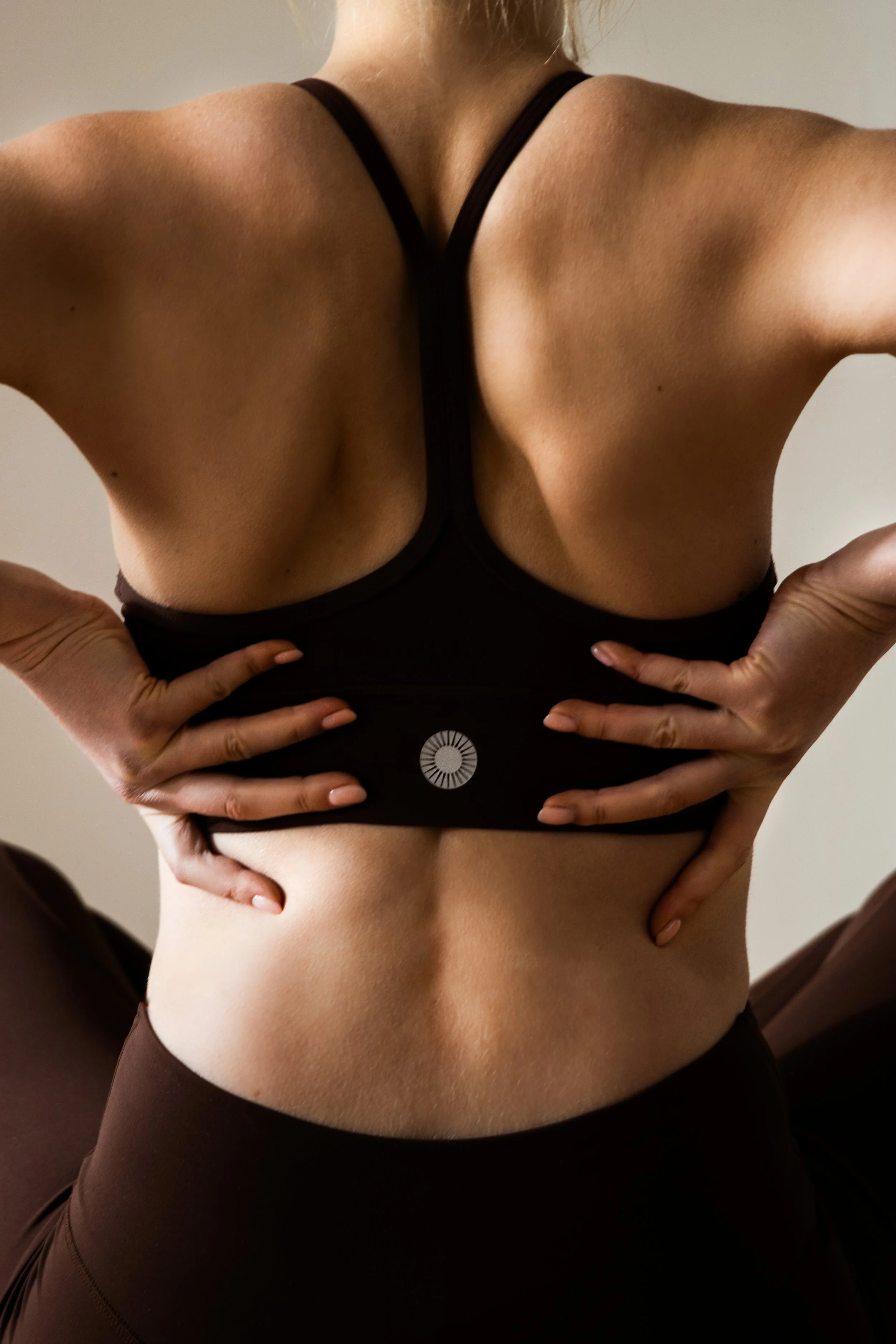
Let your breath support you
Inhaling creates length and space. Exhaling supports engagement, power and control.
Use your breath to find the rhythm of each exercise.
If you start overthinking the breath…
That’s okay. If coordinating the breath feels distracting, let go of it for now. Focus on your movement. Some exercises will feel natural to pair with the breath, others may not — that will come with practice. The breath is there to support you, not to hold you back.
the pelvis & the spine
Understanding the position of your pelvis and spine is key to moving safely and effectively in Pilates. These two structures work together to create stability, control, and ease in your practice.
Pelvic Alignment
Your pelvis is the foundation of your spine. Small changes in pelvic position can isnfluence how your whole body moves.
Neutral pelvis — This is your natural alignment; not tilted forward or backward. In neutral, your hip bones and pubic bone are on the same level, and the curves of your spine fall into place. Many Pilates exercises start here because it promotes balance and efficient movement. Please be aware that for some people this is not their standard position. If you’re unsure, seek guidance from a trained professional.
Imprinted pelvis (posterior tilt) — When your hip bones move towards your ribs and your pubic bone comes forward a bit, your pelvis is posterior tilted. Your lower back flattens into the mat. In some exercises (especially on your back), you may need this tilted/imprinted pelvis position. This offers extra support for your abdominals and protects the lower back during more challenging movements. To get familiar with this feeling, practice exercise 01.25 “Pelvic tilt”.
Arched pelvis (anterior tilt) — When the hip bones tip forward and the pubic bone more to the back, the lower back arches.
Some people naturally rest in this arched (anteriorly tilted) pelvis position. There’s nothing wrong with this — but in Pilates it can limit deep core engagement and put extra load on the lower back.
Pilates mostly shifts between a neutral and imprinted pelvic position intentionally. One is not “better” — they simply serve different purposes.
The Spine
Your spine has natural curves that support shock absorption, stability and mobility. In Pilates, the goal is to honour these curves while building strength and control around them. In this deck, you’ll find the following spine-related cues:
Neutral — Maintaining your spine’s natural curves, whether standing or lying down. Neutral looks different for every body; if your spine tends to be more arched or more rounded, you may need a slight adjustment to find your true neutral position. If you’re unsure, seek guidance from a trained professional.
Lengthening — Creating a sense of space along the spine, from the crown of your head to your tailbone, without changing its natural curves. Think of elongation without arching or rounding.
Articulating / stacking — Controlled movement of the spine, vertebra by vertebra.
Imprint — When lying on your back, gently tilt your pelvis so your lower back softens into the mat. The small space under your lower back disappears, creating a supported, stable position.
The spine and the pelvis are closely connected. A well-aligned pelvis and a supported spine help you move with more ease, efficiency, and precision — both on the mat and in daily life.
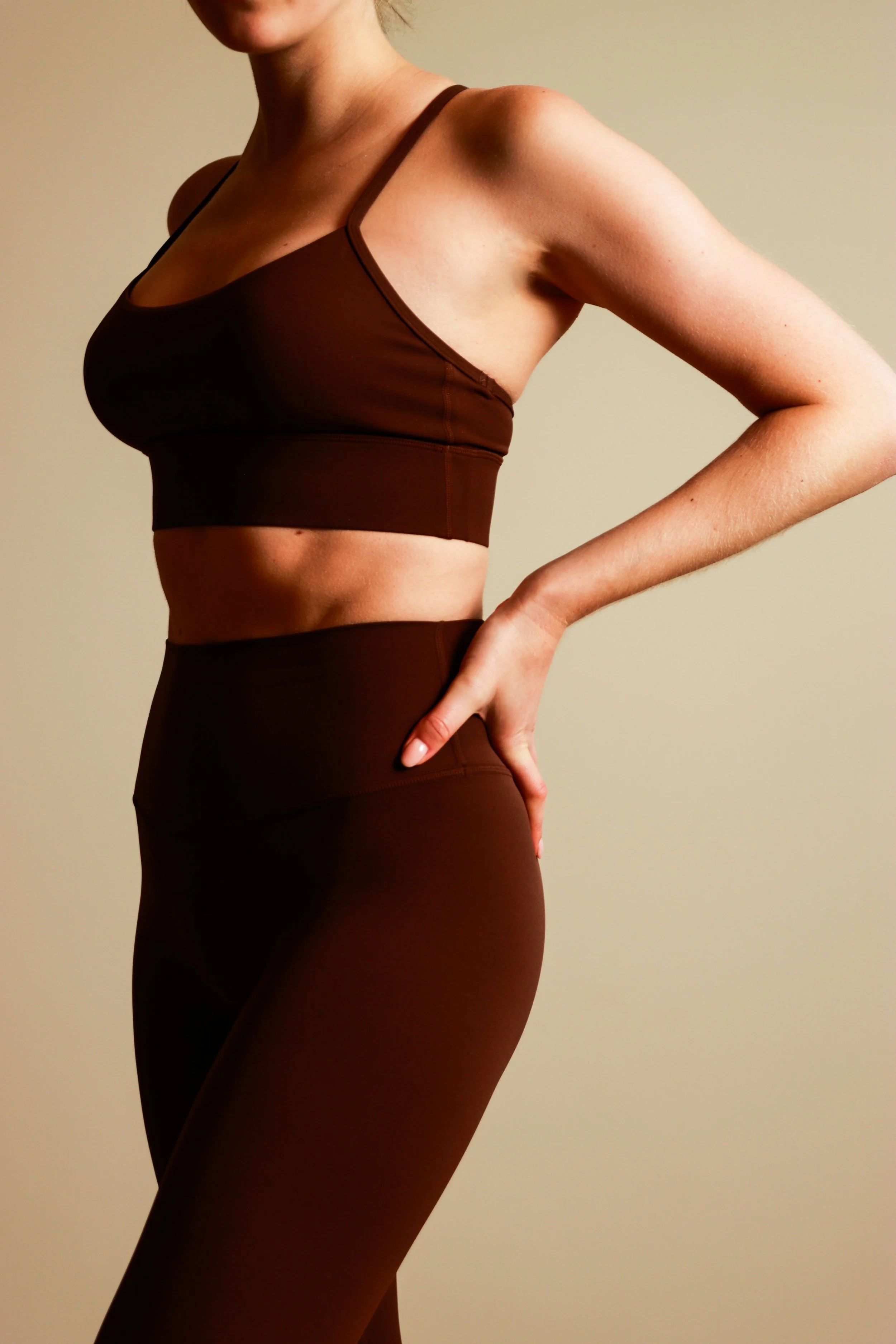
"If your spine is inflexibly stiff at 30, you are old; if it is completely flexible at 60, you are young."
— Joseph Pilates
how to use
Your Pilates Deck
You can use Your Pilates Deck in any way that supports your practice. Some people prefer to follow the illustrations as visual reminders of what comes next. Others like to read through each card while creating their routines. Or you might choose just a few cards to study in depth. However you use it, let it serve you.
We would love to see your way —
find us on social media to share and connect!
Your Pilates Deck has several features designed to serve your practice. Below you’ll find all the elements on your cards.
Each card has a number to help you easily find it back or write out your routines. Just below it, you’ll see the difficulty level. This may vary from person to person, but it gives a general sense of how the exercise compares to others in the deck.
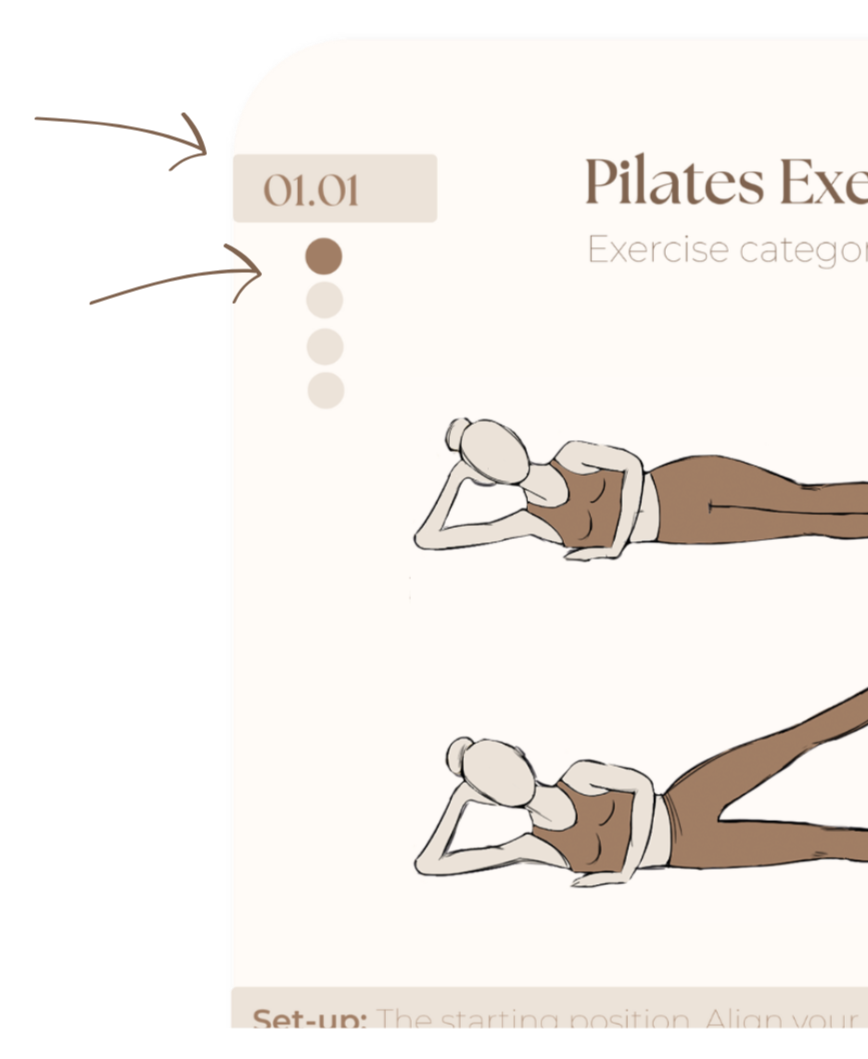
Your first deck, “Fundaments”, includes exercises across different categories. You can find these below the exercise title on the front of each card and might help you compose your routines.
Warming-up
Core
Spine
Supine
Bridges
Side lying
Prone
Swimmers
Planks
Side bends
Push-ups
Cooling down
A good foundation is essential for achieving proper alignment. That’s why every card explains how to set up your position before you start moving. Because this may not always be fully visible in the illustrations, we recommend reading these first. The set-up is also demonstrated in the exercise videos, which you can find by scanning the QR code on the back of the cards.
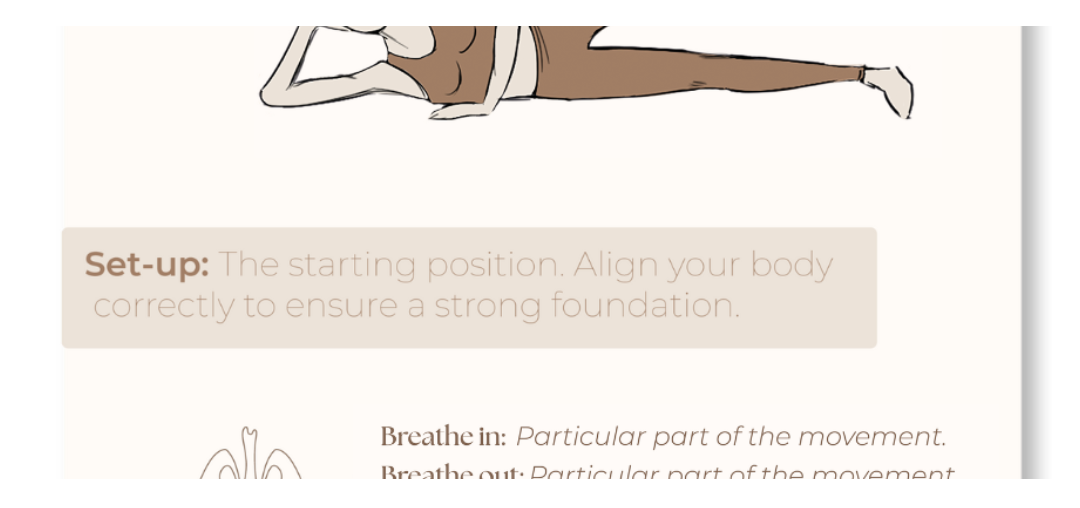
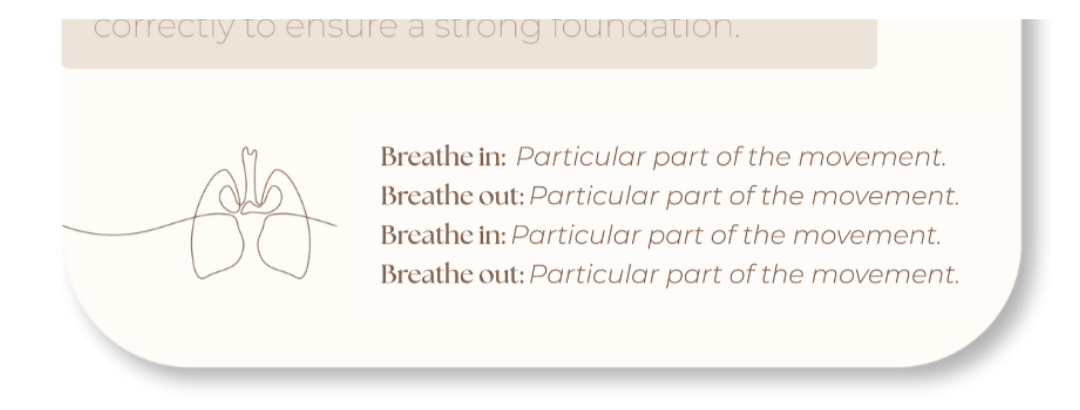
The breathing guidance helps you connect to the rhythm of each exercise and find your most efficient breath. When you see “prepare,” take a moment to focus on what’s coming and engage the muscles you’ll need for the movement, allowing your body and mind to align before you begin.
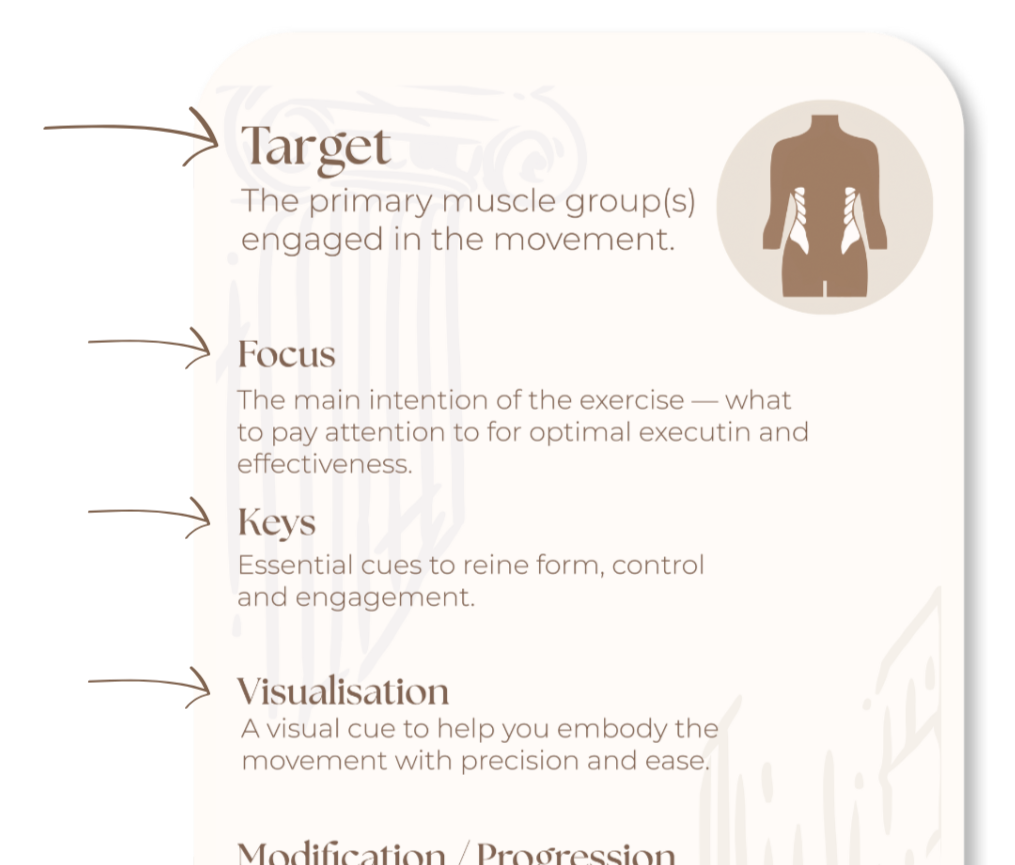
While many Pilates exercises work multiple parts of your body, each card highlights the main target muscle(s) so you can build your routine with purpose.
On the back of each card, you’ll also find the focus (main intention of the movement), keys (essential cues for form and control), and a visualisation (helping you embody the movement with ease and grace).
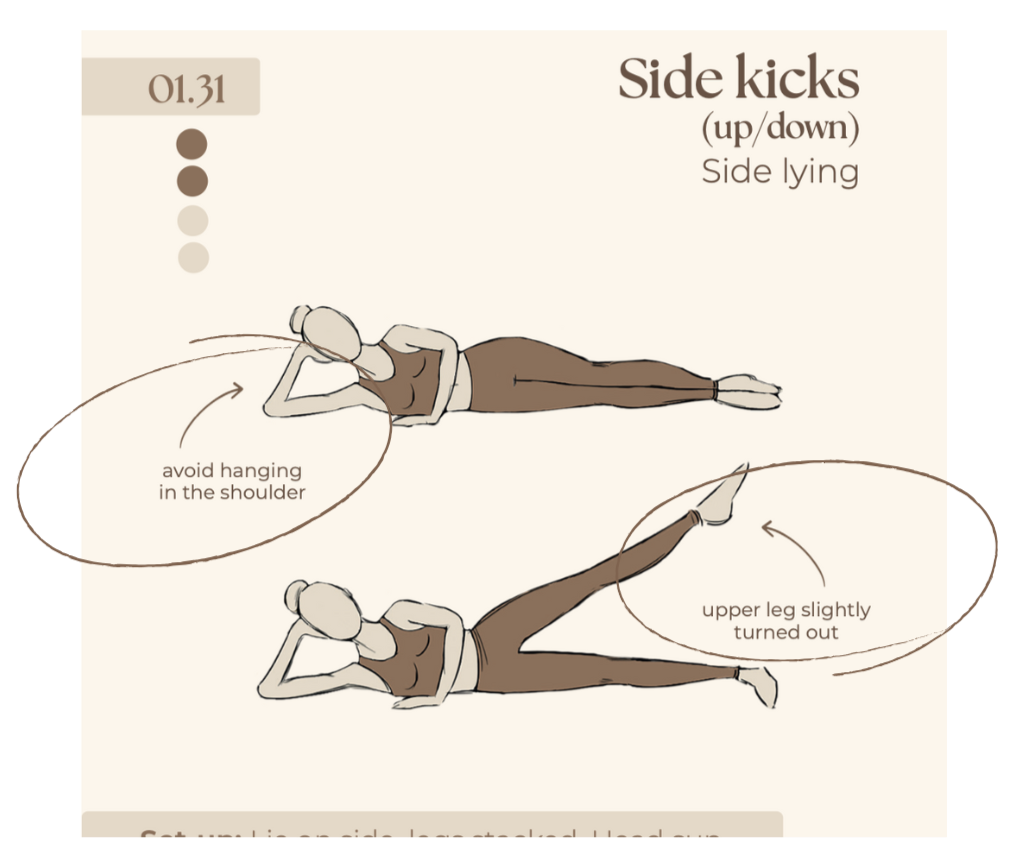
Short on time? Most cards also include subtle cues near the illustrations on the front — quick reminders to support your practice.
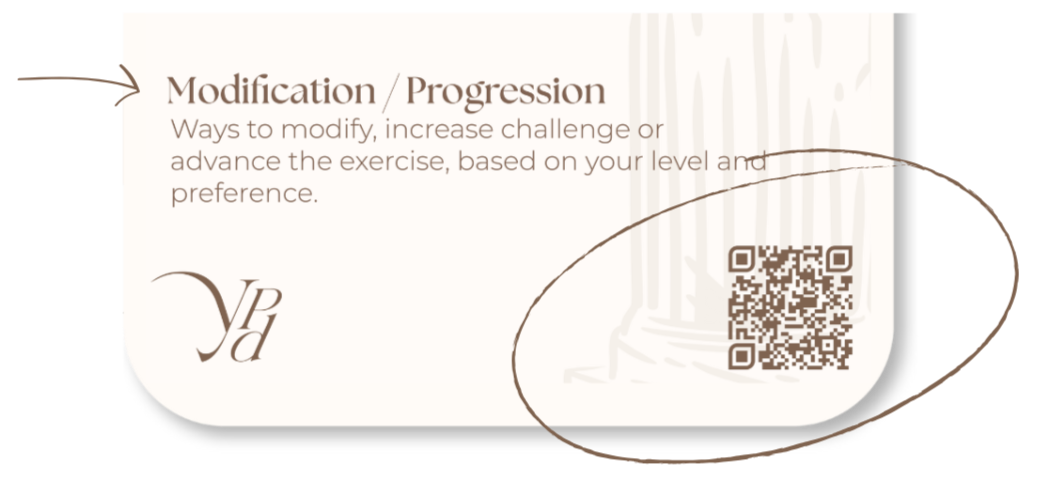
To help you practise at a level that serves you best, you can find suggestions to modify and/or progress on the back of the cards. Allowing you to adapt each movement to your needs.
If you’re new to an exercise or simply want extra visual guidance, the QR code on each card takes you to a short, clear video instruction.
A friendly reminder to conclude this section:
However you choose to use Your Pilates Deck, let your practice be a moment to connect with yourself — this is your practice. Clear away distractions so you can truly move with intention and awareness.
Meet yourself where you are today and give yourself space to grow. Some days you’ll dive deep; other days you’ll keep it simple — progress comes from showing up.
Rediscover the power of Pilates by bringing your practice back to its core;
Mindful. Offline. Personal.
optimise your practice
Amount of repetitions per exercise
In Pilates, quality always comes before quantity. If you can perform an exercise with control and precision only a few times, that might be your limit. In classical Pilates, most exercises are generally repeated 5–10 times, though the exact number can vary depending on the movement, your experience level, and your goal.
Start by performing each exercise with control and connection to your breath, prioritising form above all else. Stop when your quality begins to drop. Next time, you may be able to complete more repetitions before reaching this point — or, you might do fewer repetitions with even greater precision, and that’s where your progress lies.
Modifications
Suggestions for modifying specific exercises can be found on the back of the cards. In addition, small adjustments like the ones below can help you tailor your practice to your needs.
Neck discomfort - When performing exercises with your head lifted or your hands behind your head, let your head fully rest into your hands. If lifting the head is too demanding, rest it down or place a small cushion or ball under your neck for support.
Hip or knee discomfort on a hard surface - Place a folded blanket or towel underneath your hips or knees to reduce pressure.
Wrist discomfort - Support yourself on your forearms or make gentle fists instead of placing weight on your hands.
Shoulder tension - If your shoulders feel tight or lifted during an exercise, see if you can draw them down and away from your ears, keeping your neck long. You can also slightly adjust your arm position or reduce the range of motion to release tension.
Lower back sensitivity - If lying on your back feels uncomfortable, place a small blanket under your pelvis or sacrum. This provides gentle support while helping you maintain a comfortable, neutral position.
These are general modifications — always listen to your body. It is okay to feel a little discomfort, but never push through pain. If you feel unsure or unsafe with any movement, seek guidance from a qualified instructor before continuing.
Creating routines
There’s no single right way to build a Pilates routine — the beauty lies in discovering what works best for you. Enjoy the freedom to explore, mix, and create combinations that suit your body, time, and energy.
You can structure a routine in many ways. For example:
• Focus on a target muscle group and choose exercises that work the same area.
• Mix different targets for a balanced, full-body sequence.
• Use the exercise categories shown under each card title to combine movements with similar postures or set-ups — creating smooth transitions.
No matter your approach, start by warming up with gentle movements. It’s also wise to build towards challenge: begin with simpler exercises to prepare your muscles, joints, and focus, then gradually progress to more demanding ones. This helps maintain precision and confidence.
Some days your routine will be short and gentle; other days more structured or intense. What matters most is showing up. Explore what feels good, and your personal style of practicing will naturally emerge.
Visualisation
While performing an exercise, especially one that is new to you, visualising can help your body move the way your mind intends. For example, imagine preparing for a C-curve: visualise someone gently pressing your stomach in — this can help you naturally engage your core without overthinking the technical details. Each card includes a specific visualisation for that exercise, but you can also use general visualisations to support your practice:
Imagine…
… Someone stomping your stomach (tucking your pelvis and engaging your abs).
… A heavy weight being attached to your middle (anchoring your lower back to the floor during lying exercises).
… A fire burning under your body (helping you to stay lifted, for example during planks).
… Your hands or feet are cast in cement (grounding them firmly to the floor).
… Someone pulling your waist from a cord (keeping your torso from sinking, for example in side-lying exercises).
… Moving through thick air or peanut butter (creating your own resistance as you move your arms or legs).
… Someone gently pulling on your ankle (helping to keep your legs straight).
… A cord pulling you up from the crown of your head (lengthening your spine).
… Your shoulders melting down your back like hot wax (for shoulder relaxation).
… Your ribs wrapping around your spine like a corset (engaging sides of the core while stabilising).
disclaimers
Your Pilates Deck is designed as a supportive tool for your personal practice — at home, in a studio, or while traveling. Since professional guidance is invaluable, we recommend using the deck alongside classes taught by a certified Pilates instructor.
Health disclaimer
Before beginning any exercise program, including exercises from Your Pilates Deck, consult a healthcare professional — especially if you have existing injuries, medical conditions, or concerns. The information provided is for educational purposes only and does not replace professional medical advice.
Always listen to your body and modify exercises to suit your abilities. Use the deck at your own risk. Your Pilates Deck is not liable for any injury or harm arising from its use.